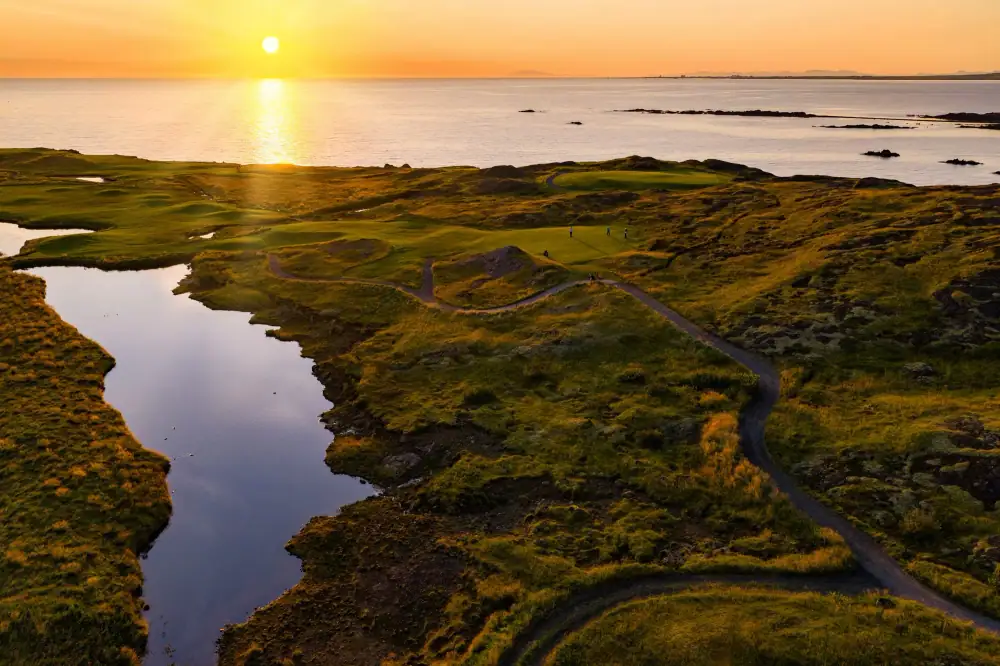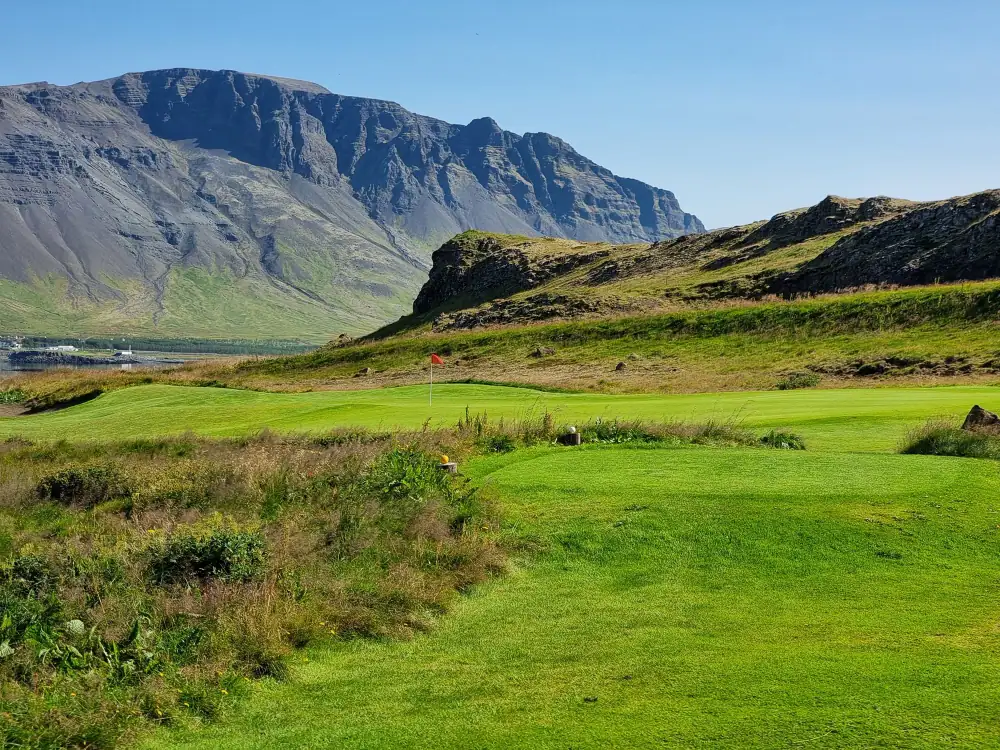
The Ground
Long before anyone farmed here, Kjalarnes was a volcano.
Two to three million years ago a great central volcano stood where the sounds off Reykjavík lie today. Its caldera may have spanned the bay. Ice ages and the North Atlantic have since stripped it down to its roots, and those roots are what you play on.
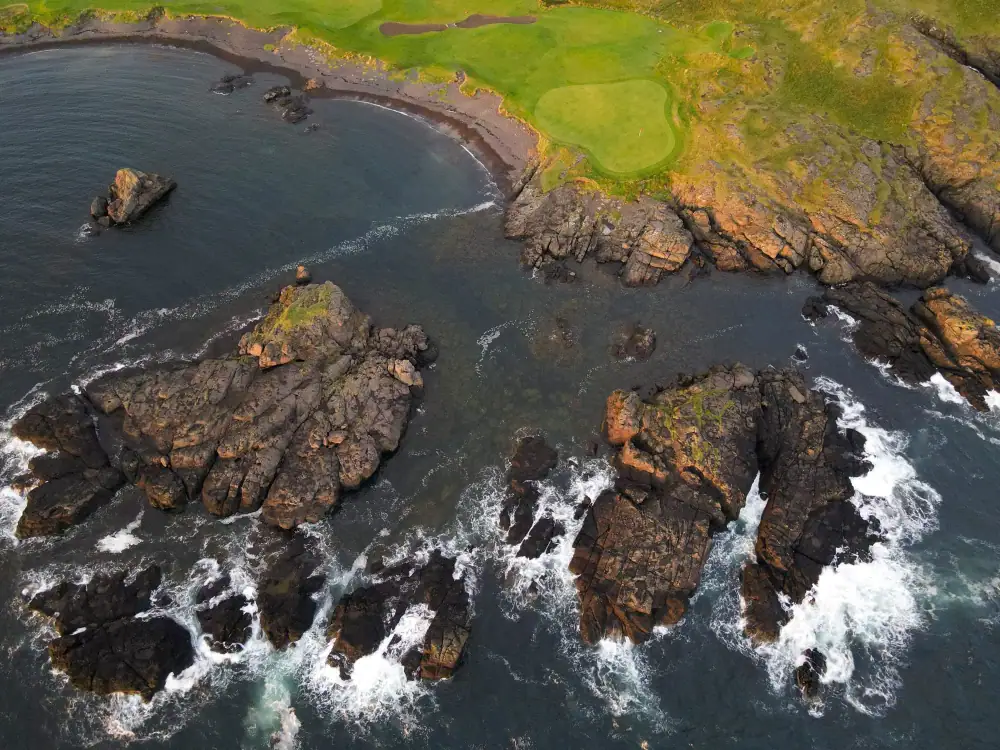
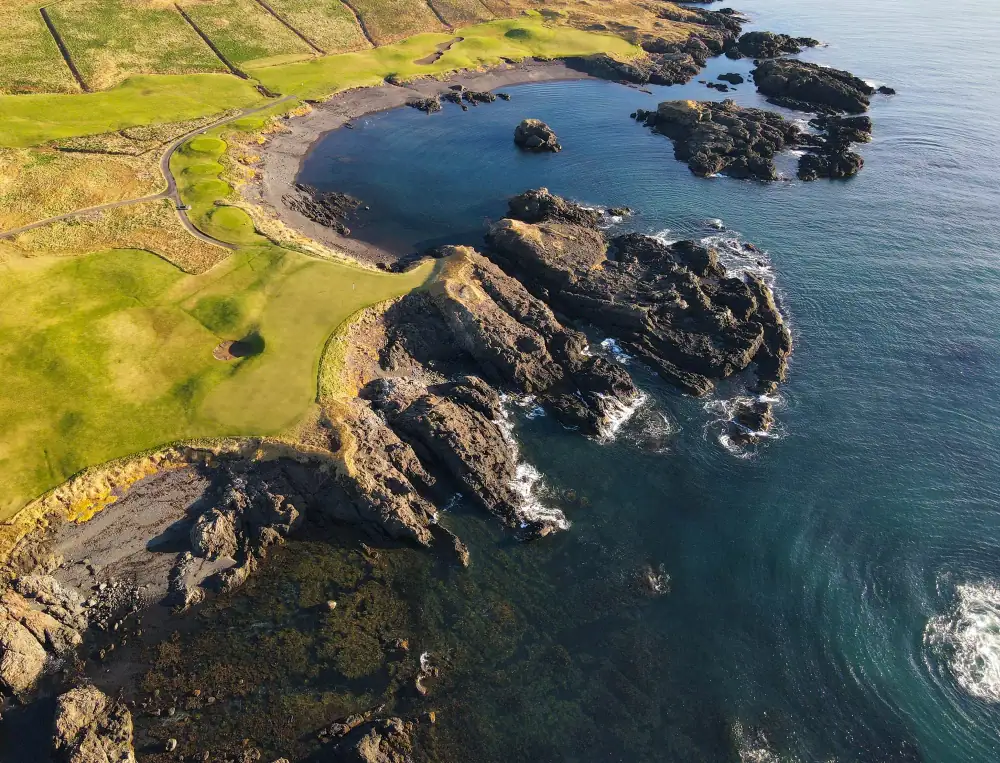
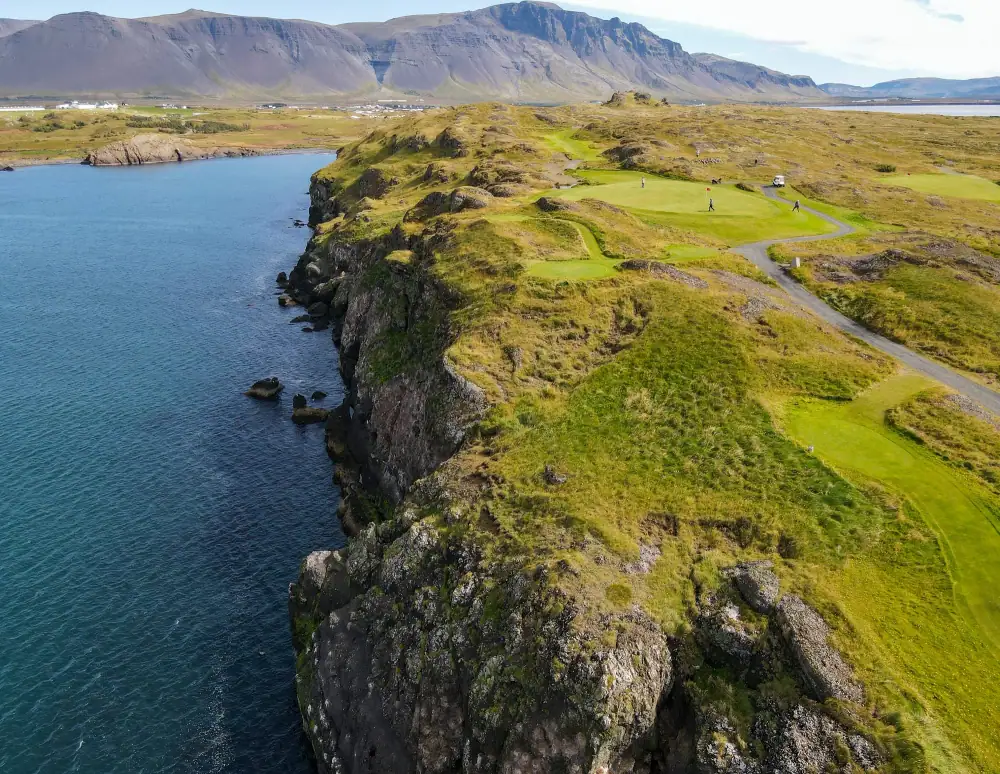
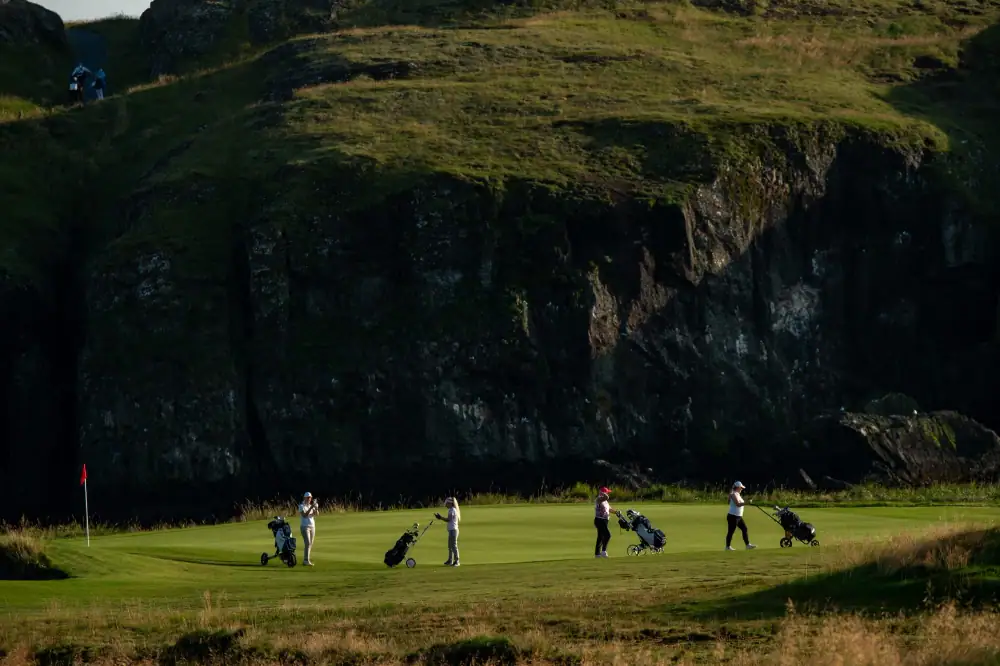
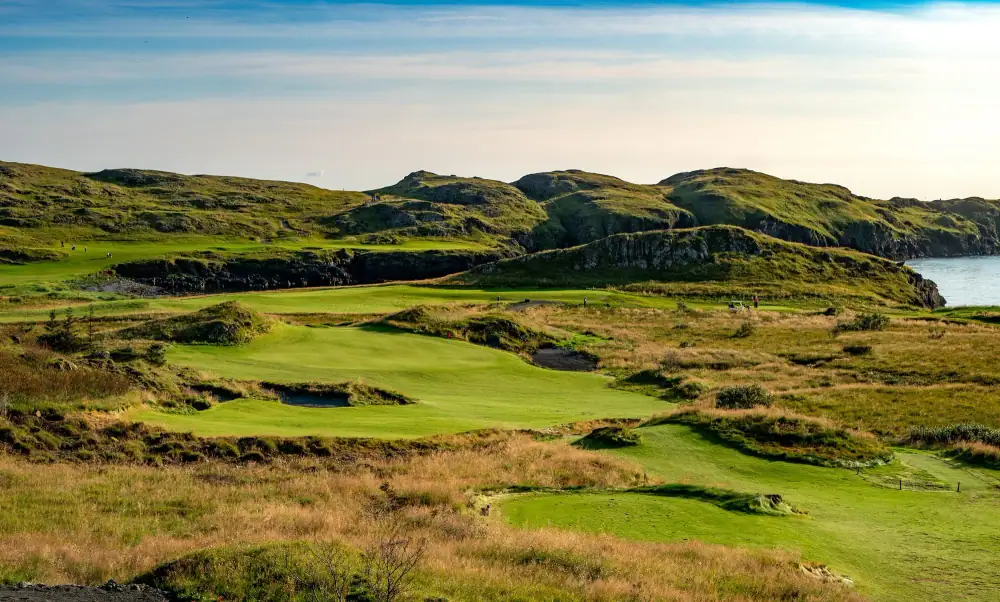
Look at the cliffs on the opening holes, the black rock that frames the 5th, and the sea stack called Gullkista with its cap of columnar basalt. You are looking at the inside of an extinct volcano, turned out to the weather. At Músarnes, the headland the course wraps around, geologists point to some of the finest intrusions on the whole peninsula: veins of rock that were once molten and forced their way up through older lava. Along the shore the stone forms rounded "pillows", where lava met water and cooled in an instant.
It isn't young lava. It's older and stranger than that. The holes were laid on top of it rather than carved out of it, so the ground still tells its story at every turn.
Sources
- visindavefur.is/svar.php?id=9057
- ferlir.is/kjalarnes-brautarholt-gullkista-2/
- ferlir.is/esjan-ingvar-birgir-fridleifsson-jardfraedingur/